
Zuckerberg said the AI burtler would look like Jarvis from Hollywood blockbuster film Iron Man

Deals shrink to $396 million this year, compared to $793 million in 2011.

During the quarter, venture capital firms have invested $144 million through 21 deals, a sharp decline compared to the corresponding period previous year which had recorded 28 deals worth $173 million. The maximum VC investment was attracted by online travel portal Cleartrip.com of about $18.5 million from DAG Ventures.
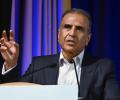
Bharti Global, the international investment arm of Bharti Enterprises, has decided to buy 24.5 per cent equity in BT Group - a move that will make the Indian conglomerate the biggest shareholder in the UK's second-largest telecom company both in terms of market value and subscriber count. The shares are being purchased from billionaire Patrick Drahi's Altice UK through a combination of cash and debt .

The Indian startup ecosystem recently celebrated the 100th unicorn milestone. It came after a month of no big fund announcements. Compare this to 2021, when three to four unicorns were being added every month. Nevertheless, the 100th unicorn needs to be celebrated since the first unicorn was announced in 2011 - 11 years ago.

According to Venture Intelligence, a research service focused on private company transactions, PE firms invested $8,853 million this year, compared to the $10,378 million across 483 deals a year ago.

While 2017 was a record year for private equity investments in India after $23.5 billion in 660 deals, 2018 too has begun with a bang.

An increase in the farmer income support scheme PM Kisan Nidhi, the introduction of a 'robot tax' to fund reskilling of people who lose their jobs to artificial intelligence (AI), and a reduced income-tax (I-T) to bring relief to the middle classes - these are some of the items in the Budget wish list submitted by Sangh Parivar affiliates to Finance Minister (FM) Nirmala Sitharaman. Representatives of the affiliates of the Rashtriya Swayamsevak Sangh (RSS), such as the farmer organisation Bharatiya Kisan Sangh (BKS); trade union Bharatiya Mazdoor Sangh (BMS); Laghu Udyog Bharati, which works for micro and small industries; and Swadeshi Jagran Manch (SJM), which works on economic and policy issues, met the FM and other officials over the last couple of weeks as part of the pre-Budget consultations.
Funding winter and corporate governance woes separated the men from the boys in the country's startup space in 2023 that saw funds into the segment tapering to just around $8 billion. All said, investors are hopeful of strong growth of the maturing startup ecosystem in the new year. Edtech and health tech segments that grew exponentially during the pandemic plunged into an abyss of financial uncertainties, with several firms shuttering their business, and valuation of prominent players like BYJU'S and PharmEasy plummeting 85-90 per cent.

Private equity investments in the January-March quarter of the 2011 calendar year were about 57 per cent higher than the $ 2.1 billion worth of PE investment registered in the year ago period and more than double October-December's $1.5 billion, according to data provider Venture Intelligence.

According to the PwC MoneyTree India report, a quarterly study of private equity investment activity based on data by Venture Intelligence, private equity PE firms invested $2.5 billion across 97 deals in Q3 of 2012, against USD 2.4 billion from 121 deals a year ago.

With 16 start-ups gaining unicorn status in 2021, India's tally has touched the 50 mark. The newest entrant to this list include Pune-based MindTickle, which is close to finalising a $100-million funding round from Softbank's Vision Fund 2, taking the company's valuation to $1.1 billion.

Company identifies areas like cognitive technologies, artificial intelligence, man-machine interface, robotics

Industries such as aviation and hospitality have many silos within them and Aionos, the joint venture between Interglobe Enterprises (IGE) and Assago Group, is an attempt to bridge them and boost efficiencies using artificial intelligence (AI) solutions, Rahul Bhatia told Business Standard on Tuesday. Bhatia, the Group Managing Director of IGE, serves as the majority shareholder in India's largest airline, IndiGo. Additionally, IGE operates 21 hotels under the Ibis brand and runs a logistics company called Movin.

In the April-June quarter this year USD 2,916 million was invested across 112 deals, while last quarter saw an infusion of USD 3,361 million across 91 deals, according to a study by Venture Intelligence, a research service focused on Private Equity and M&A transaction activity in the country.
Investment by PEs into HLS sector dropped to $203 million in 2008-09 from $836 million in 2007-08, while the number of deals dropped 51 per cent to 21 from 43 deals. Similarly, VC investments also declined to $48 million from $80 million. In terms of deals, they dropped to 11 from 14.

Private equity investments in India have touched an over one-year high of $2 billion in the January-March quarter of 2010, an increase of 19 per cent over the previous quarter. Private equity firms invested about $2 billion across 56 deals during the quarter ended March 2010.

At a time when the Indian startup space is going through a funding winter, marked by investors tightening their purse strings, angel investments in fledgling firms have maintained their momentum. While overall deal volumes among startups have fallen, investment activity among the country's most-active angel investors have been relatively steady. We Founder Circle (WFC), a Mumbai-based network of angel investors, emerged as the most-active angel investment platform for the second consecutive year in 2023 with 82 investments.

When its founder, Raghunandan Kamath, took a calculated risk, his Bollywood customers backed him all the way, say Rohith Potti and Pooja Bhula.

The average deal size has gone up from $7 million in 2009 to $12 million this year.
India's merger and acquisition scene for the first quarter of 2009 has been dismissal. Indian companies were involved in a total of 54 deals for this quarter--that is a decline of 60 per cent year-on-year and about 40 per cent drop on a sequential basis--says a Venture Intelligence report.

Difficult fund raising conditions slowed the pace of private equity (PE) investments in the country by 64 per cent to a four-year low of $3.8 billion in 2009.
According to Venture Intelligence, a research service focused on private equity (PE) and venture capital activity, the first nine months of 2006 have witnessed eight buyouts by PE investors, compared with six in the entire 2005 and just two in 2004.
Private equity deals in Jan-Mar 2008 touched $3.3 bn, higher than the year-ago period, which registered 101 deals fetching $2.7 bn, according to the data released by Venture Intelligence, a private equity research company. $3.3 bn mopped up through 97 private equity deals in the Mar 2008 quarter were lower than 131 deals totalling $5 bn in the preceding Dec 2007 quarter. Volatility in the secondary market injected a dose of caution on the Private Investments in Public front.

Vijay has a lot of young and middle-aged women fans, but as voters, they are possibly now with the DMK, or remain with the AIADMK. Recapturing this constituency would have helped Vijay's political launch and the GOAT script and dialogues could have gone a long way in helping out. But the kind of script and screenplay and the unusually and equally unnecessary long run-time (3 hours, 3 minutes) that GOAT offers takes the film experience over the heads of those that are not familiar with secret agents and uranium theft in Tamil cinema, observes N Sathiya Moorthy.

Why are financial-technology (fintech) players moving back to India, or doing the reverse-flipping?

'I think some of us, like Mukesh Ambani, myself and those of us who head industrial units, ought to really focus on what we can really do to make the world a safer place, maybe 50 or 100 years from now.' 'For instance, how can we deal with climate change and global warming, right now?' 'The effects of it may not be felt now; in fact, we may pay a price for it today, but it will help the generations to follow.'

Amphibious drones for maritime inspection... devices that extract pure oxygen from water for patients in need... self-balancing electric bikes...

Digital literacy is emerging as the professional language of 2024. It is the ability to process complex data sets, deploy critical communication technologies appropriately and validate your importance at your workplace, explains Jagdeep Kochar, managing director, Baker & Taylor India.

Technology companies continue to be the most valued brands globally, with the top five most valued companies from the technology sector, according to Brand Finance 2024. Samsung has entered the top five most valued brands globally. Apple secured the first position after falling to the second spot in 2023.

In an interview with Ranju Sarkar, the founders of Stellaris Venture Partners -- Ritesh Banglani, Alok Goyal and Rahul Chowdhri -- share discuss their unique founder network and why they are bullish on India.

Foreign investment in India's start-ups has plummeted 72 per cent to $4.58 billion so far, from $16.2 billion during the same period last year.

Nikkei 225 index hit the 40,000 mark for the first time ever on Monday, continuing its bull-run that saw the index reclaim its 1989 peak of 34,000 levels in February. as global investors latched on to Japan's biggest companies on improving shareholder returns, the weaker yen and booming corporate profits. Analysts remain bullish on Japan, mostly aided by gains in technology shares. Adoption of artificial intelligence (AI), according to a note by Morgan Stanley, is likely to benefit Japanese companies, which is almost at par with the US-based companies.

Food delivery major Swiggy has received approval from its shareholders for a $1.25 billion initial public offering (IPO), according to filings made with the Registrar of Companies sourced by Tofler. The Bengaluru-based firm plans to raise as much as Rs 3,750 crore (around $450 million) via a fresh issue and up to Rs 6,664 crore (around $800 million) through an offer-for-sale (OFS) component, the filings stated.
$47.6 bn capital invested across 921 deals in India in 2020, despite pandemic.

Nearly half of the investments by various US-based investors have been made in Reliance subsidiary Jio.

In 2024 so far, 20 startups have already visited the campus with 80 placements.

We asked colleagues, present and past, to reflect on a man who has made such a difference to their lives and careers. Here it is then, a rich collection of memories that offer enchanting glimpses of the enigmatic Ajit Balakrishnan.

'Investing abroad helps mitigate currency risk for foreign-currency denominated goals, such as children's higher education and international travel.'

'The success of one or two IPOs does not dictate whether the upcoming IPOs will be successful or not, but it certainly indicates that the markets and investors are enthusiastic about startup IPOs.'
